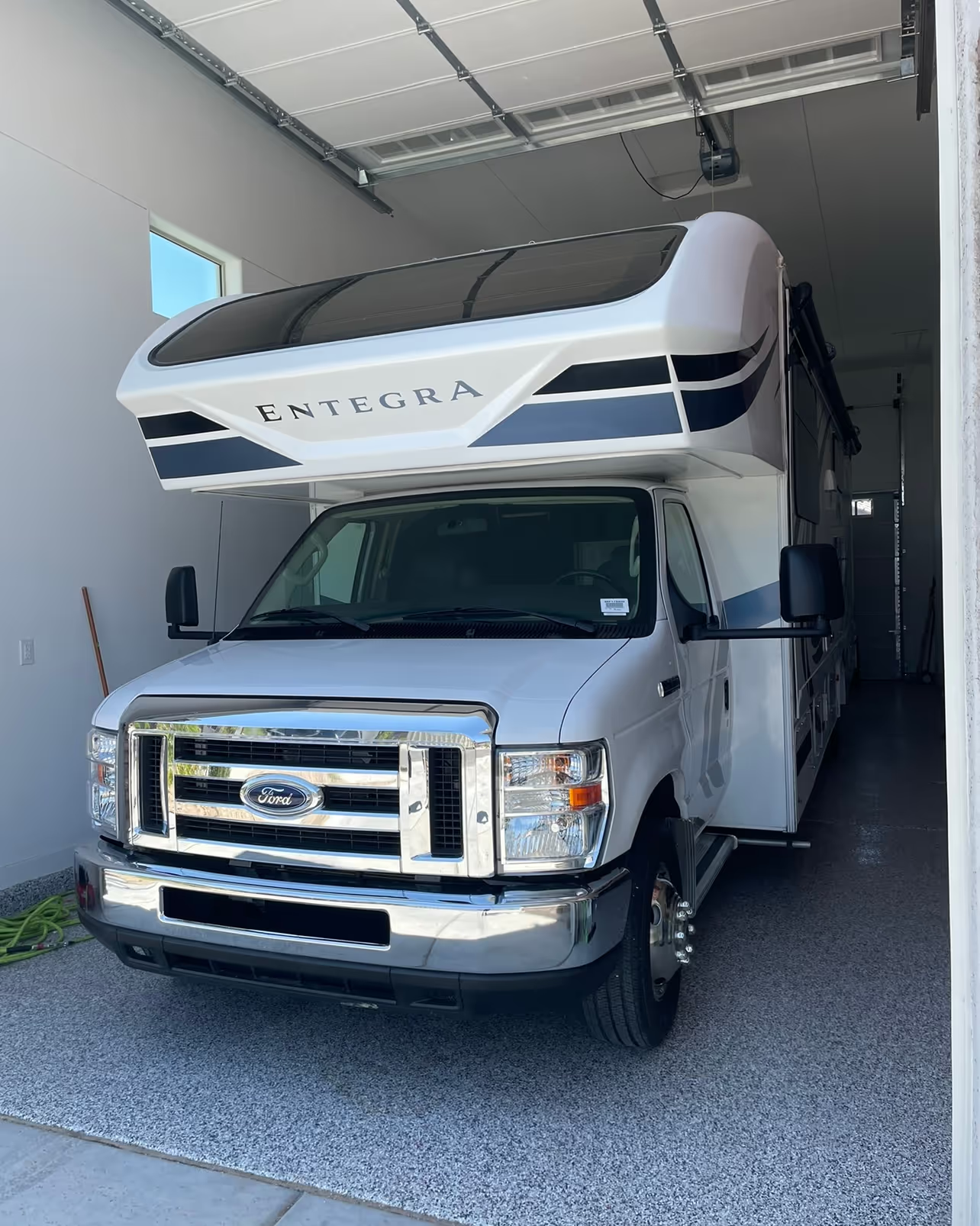


Price your RV rental by starting from what similar RVs nearby actually charge, then adjusting for season, day of the week, trip length and the fees you add. On Outdoorsy, typical nightly rates run about $150 to $250 for a Class C, $225 to $400 for a Class A and $75 to $150 for a travel trailer. The goal is not the highest nightly rate; it is the most income across the season, which usually means a fair rate that keeps the calendar full.
How much should you charge to rent out your RV?
Start with the going rate for RVs like yours in your area, then adjust for condition, features and demand. Outdoorsy’s May 2026 pricing guide gives these typical nightly ranges for well-maintained rentals in decent demand:
| RV type | Typical nightly rate (Outdoorsy) |
|---|---|
| Class A motorhome | $225 to $400 |
| Class C motorhome | $150 to $250 |
| Class B camper van | $100 to $175 |
| Fifth wheel | $100 to $175 |
| Travel trailer | $75 to $150 |
These are platform-wide ranges, not RV Management USA rates. Your local market can sit above or below them. For how type affects earnings, see Class A vs Class C vs travel trailer: which earns more.
How do you find comparable RVs to price against?
Search the rental platforms for RVs of the same type, size, sleeping capacity and age within driving distance of you, for the dates you want to price. Note the nightly rate, minimum nights, mileage and generator terms, and how full their calendars look. A calendar that is booked solid at a given rate suggests that rate is safe; empty calendars at a high rate suggest the market will not pay it.
How should rates change by season and day of the week?
Charge more when demand is high and less when it is low. Outdoorsy notes that summer and holiday weekends raise rates, while late fall and early spring are when rates drop, and that weekly stays typically get 10% to 20% off the nightly rate.
| Period | Demand | Pricing move |
|---|---|---|
| Summer and holiday weekends | Highest | Top of your range; longer minimum stays |
| Spring and fall shoulder | Moderate | Mid-range; weekday discounts |
| Off-season | Lowest | Lower rates, shorter minimums, or owner use |
| Weekly stays | Any | About 10% to 20% off the nightly rate |
Seasons differ by region. Our guide to how seasonal demand changes RV rental income covers the pattern in more detail.
Why is the highest nightly rate not always the best?
Because income is rate times booked nights, and a rate that is too high can cost more nights than it gains. Here is simple arithmetic, as an illustration only: 10 nights at $200 is $2,000, while 14 nights at $175 is $2,450. The lower rate earns more if it fills more of the calendar. The reverse can also be true in peak season, when demand is strong enough to hold a higher rate.
The useful habit is to watch both numbers together: if the calendar fills months ahead, the rate may be too low; if peak dates are still open close in, it may be too high.
Which fees should you add on top of the nightly rate?
Common add-ons are cleaning, mileage, generator, delivery and a security deposit. Outdoorsy’s guide lists cleaning fees of $75 to $200, generator fees of $3 to $5 an hour or $25 to $50 a day, mileage caps of 100 to 150 miles a day with $0.25 to $0.45 a mile over the cap, delivery at $1.50 to $3.00 a mile, and security deposits of $500 to $1,500 held on the renter’s card.
Fees protect the RV and cover real costs, but renters compare the total price. Too many fees can push them to a listing with a higher nightly rate and fewer add-ons. For other ways to raise income, read 8 levers owners control to increase RV rental income.
How does pricing work in a rental management program?
In a management program, the manager usually handles listing and pricing, and your share depends on what the RV actually earns. In the RV Management USA program, the revenue split is 45% to the owner, 45% to the Fleet Manager and 10% to RV Management USA, and the agreement defines deductions and payout timing. Most owners make $500 to $2,000 a month, a program range rather than a promise.
If you want a minimum rate or want to block dates for your own trips, ask your Fleet Manager how that works for your RV; the owner can use the RV on unbooked dates, with notice. For a rough estimate, try the RV rental income calculator.
Frequently asked questions
What is a good nightly rate for a Class C RV?
Outdoorsy’s May 2026 guide puts typical Class C rates at about $150 to $250 a night. Check comparable listings near you, because local demand moves the number.
Should I offer weekly discounts?
Weekly stays commonly get 10% to 20% off. Longer trips mean fewer turnovers, which saves cleaning time and wear.
Should I set a minimum number of nights?
Many owners use longer minimums in peak season and shorter ones off-season. Minimums cut turnover costs but can leave short gaps unbooked.
How often should I change my rates?
Review rates at least each season and whenever your calendar is filling much faster or slower than usual.
Want your RV priced and booked for you?
If you would rather not research rates and manage bookings yourself, talk with a Fleet Manager and the RV Management USA team about what your RV could earn in your market.