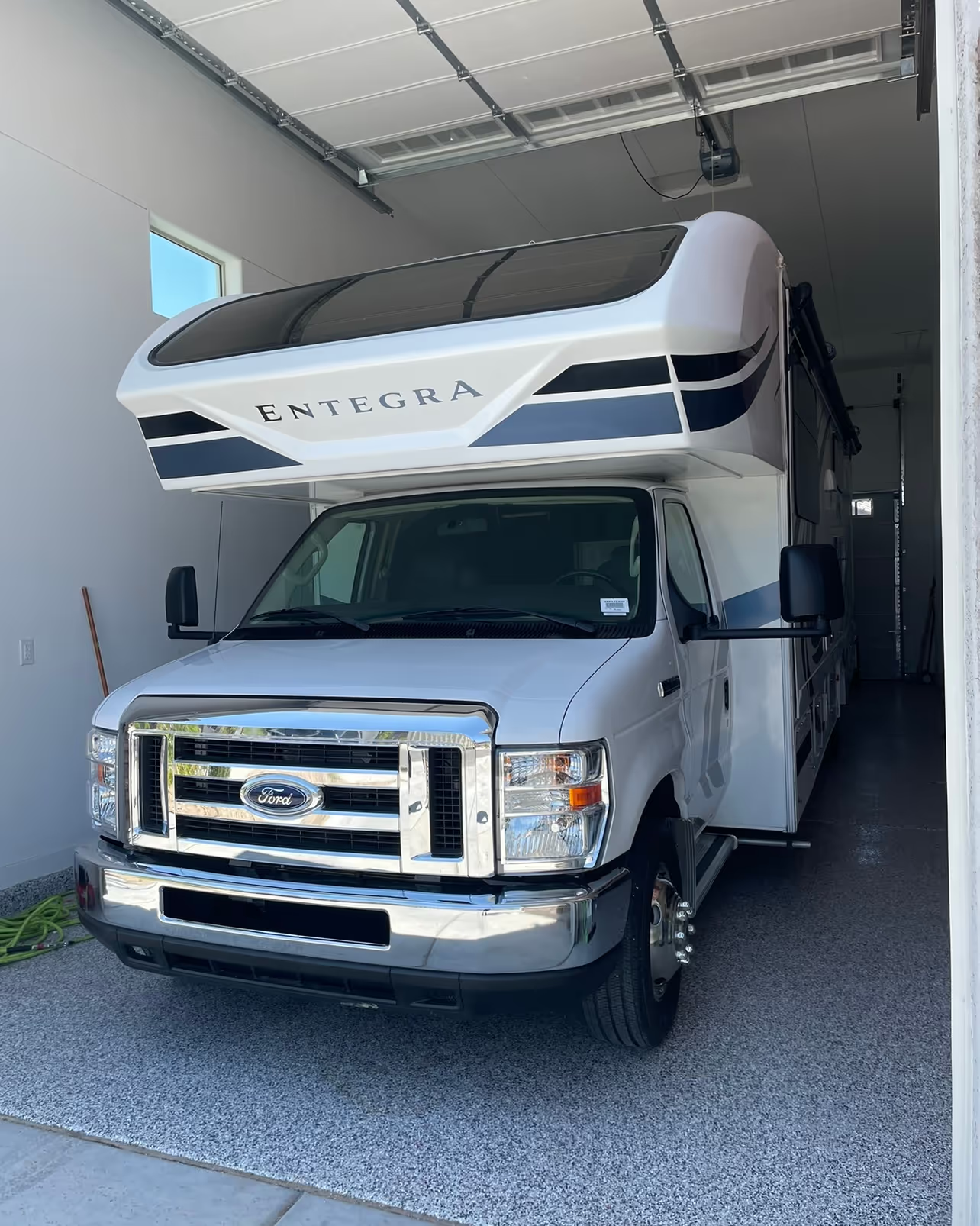


An RV manager is the person or company that runs the rental side of your RV for you: listing it, pricing it, screening renters, handling handoffs and turnovers, coordinating upkeep and paying you out, in exchange for a share of the rental revenue. You keep ownership of the RV. At RV Management USA, that local role is called a Fleet Manager.
What does an RV manager do?
Think of an RV manager the way you would think of a property manager for a vacation home. The owner provides the asset, and the manager does the day-to-day work of turning it into rental income. The table below shows how responsibilities usually divide in the RV Management USA program.
| Task | Who usually handles it |
|---|---|
| Listing, photos and pricing | Fleet Manager |
| Answering renter questions and screening renters | Fleet Manager |
| Pickups, returns and walk-throughs | Fleet Manager |
| Cleaning and turnover between rentals | Fleet Manager |
| Preventative maintenance | Coordinated by the Fleet Manager, billed to the owner |
| Rental damage | Covered by the renter’s deposit plus the commercial rental policy |
| Systemic repairs (worn-out components, not renter damage) | Owner’s cost |
| Basic personal insurance on the RV | Owner keeps it in force |
| Monthly owner statement and direct deposit | RV Management USA |
For a deeper look at the whole process, read our guide to how RV rental management works, what it costs and who it fits.
How does an RV manager get paid?
Most RV managers are paid from the rental revenue rather than a flat monthly fee. In the RV Management USA program the split is 45% to the owner, 45% to the Fleet Manager and 10% to RV Management USA. The management agreement defines deductions, such as preventative maintenance billed to the owner, and when payouts happen.
| Example month | Amount |
|---|---|
| Gross rental revenue | $3,000 |
| Owner share (45%) | $1,350 |
| Fleet Manager share (45%) | $1,350 |
| RV Management USA share (10%) | $300 |
This is an illustration of the split, not a forecast. Deductions defined in your agreement come out before payout, and bookings vary by season, market and RV. Most owners in the program make $500 to $2,000 a month, and Class A, B and C motorhomes average $8K to $20K a year. Those are program ranges, never a promise. Our RV rental income calculator gives a starting estimate for your RV.
Is an RV manager the same as RV consignment?
Not in the selling sense. At a dealership, RV consignment usually means the dealer sells your RV for you and takes a commission. In RV rental management, a “rental consignment agreement” means the management agreement: you keep the RV, and it is rented out on your behalf. RV Management USA does not sell RVs.
If you are deciding between selling and renting, compare the numbers in our guide to RV consignment fees and what sellers net.
What does an RV manager not cover?
A good manager reduces the work of ownership but does not remove the costs of ownership. In the RV Management USA program:
- Preventative maintenance is billed to the owner and can be deducted from profits.
- Systemic repairs, such as a component wearing out with age, are the owner’s cost.
- The owner keeps basic personal insurance in force. Rental damage is covered by the renter’s deposit plus the commercial rental policy.
Our guide to RV rental insurance coverage explains how those layers of protection fit together.
How do you choose an RV manager?
Ask the same questions of any manager you are considering, and get the answers in writing.
| Question to ask | Why it matters |
|---|---|
| How is revenue split, and what comes out before my payout? | The split alone does not tell you what you net. |
| Who pays for maintenance, and who pays for repairs? | Preventative maintenance and systemic repairs are different line items. |
| How is rental damage handled? | You want a deposit plus a commercial rental policy, not your personal policy, to respond. |
| How long is the agreement? | RV Management USA agreements typically run 6 to 12 months. |
| How and when am I paid? | Look for a monthly statement and direct deposit. |
| Can I still use my RV? | In our program, owners can use the RV on unbooked dates, with notice. |
Before you sign anything, read through the key terms to check in an RV rental management agreement.
Which RVs are a good fit for a manager?
Renters book newer, clean, reliable RVs, so managers are selective. RV Management USA generally accepts RVs 5 years old or newer, with exceptions for very well-maintained older units. The focus is newer Class A, B and C motorhomes and late-model bunkhouse travel trailers, and fifth wheels and conversion vans are also considered. If you are unsure, our quick self-check on whether RV rental management is right for you can help.
RV manager FAQ
Is an RV manager the same as a Fleet Manager?
At RV Management USA, yes. Fleet Manager is our name for the local manager who runs your RV’s rentals. Some older pages use the term Territory Manager for the same role.
Can I still use my RV if a manager rents it out?
Yes. In our program you can use the RV on unbooked dates, with notice to your Fleet Manager.
Do I still need my own insurance?
Yes. The owner keeps basic personal insurance in force, while rental damage is handled through the renter’s deposit and the commercial rental policy.
How long do RV management agreements last?
Typically 6 to 12 months. The agreement sets the exact term, deductions and payout timing.
Is hiring an RV manager better than renting it out yourself?
It depends on how much time you want to spend on renters, cleaning and logistics. Our honest look at the pros and cons of RV rental management lays out the tradeoffs.
Find out what a Fleet Manager could do with your RV
If your RV sits more than it travels, talk with a Fleet Manager and the RV Management USA team. We will check eligibility, explain the 45/45/10 split and give you a realistic range for your RV, with no obligation.