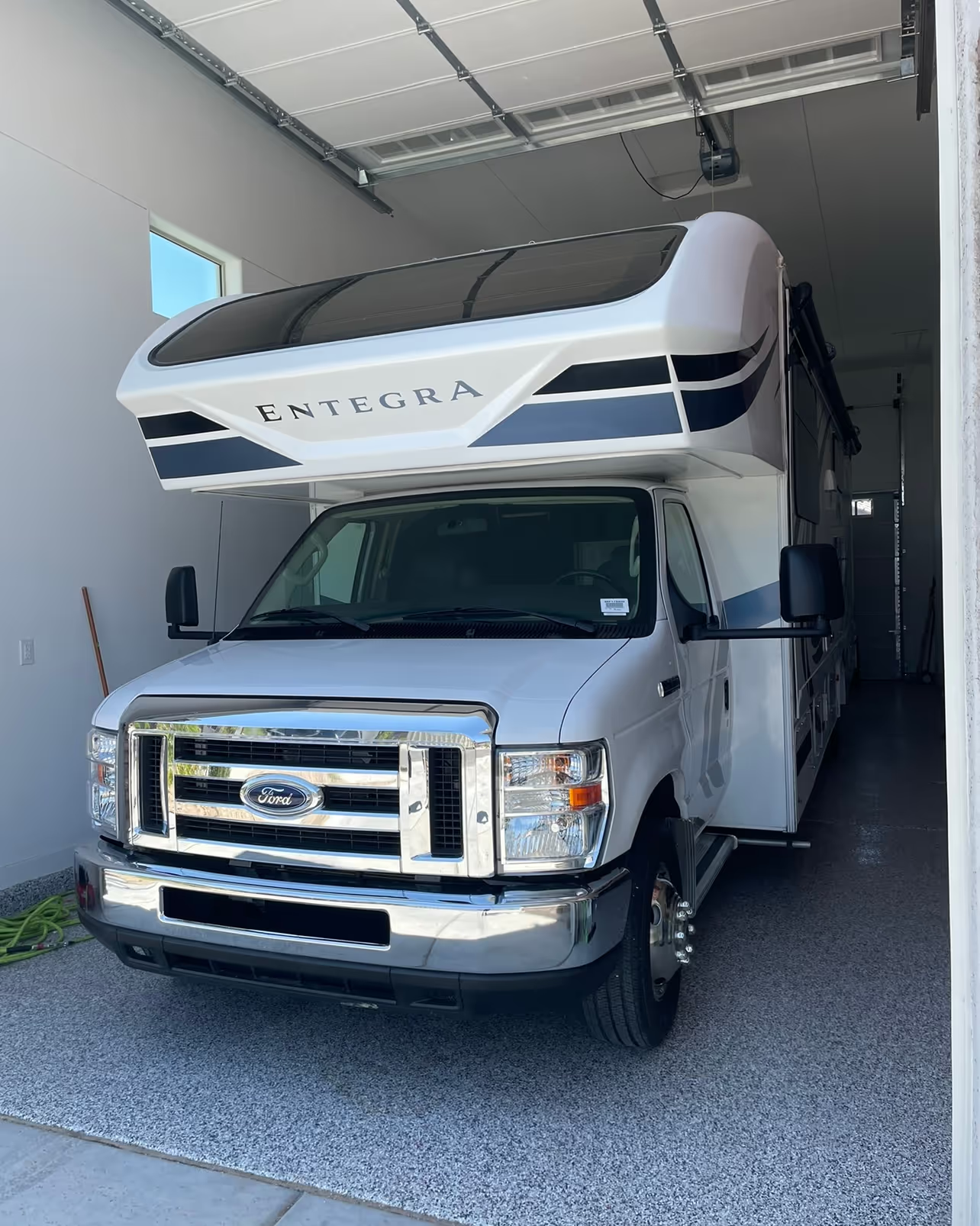


Neither is better for everyone. An RV rental usually costs far less to buy into and is easier to exit, but the RV loses value over time, so the return depends almost entirely on rental income. Rental real estate costs more and is harder to sell, but property has tended to hold or gain value, and the land under it does not wear out. An RV fits investors who want a smaller, shorter-term income asset; real estate fits those who want long-term appreciation and can handle a bigger commitment.
Is an RV a better rental investment than real estate?
An RV can be the better fit if you have less capital, want a shorter commitment and accept that the asset will lose value. Real estate can be the better fit if you can make a larger down payment, want an asset that may appreciate and plan to hold for many years. The comparison below shows the main differences.
| Factor | RV rental | Rental real estate |
|---|---|---|
| Entry cost | Usually much lower | Usually much higher, plus closing costs |
| Value over time | Usually declines with age and use | Has tended to rise over time, though it can fall |
| Income pattern | Seasonal, booked by the night or week | Often steadier with long-term tenants |
| Wear and repairs | Engine, chassis and house systems wear with every trip | Building systems wear more slowly |
| Ease of selling | Generally quicker to sell | Slower and more costly to sell |
| Tax depreciation | May be depreciable when used to produce income; rules depend on use | Residential rental buildings use a 27.5-year recovery period; land is not depreciable |
| Management | Many short bookings, cleanings and handoffs | Fewer turnovers with long-term tenants |
How do the returns compare?
RV returns come mostly from rental income, while real estate returns come from rent plus any rise in value. That difference matters more than any single month’s income.
On the RV side: Most owners in the program make $500 to $2,000 a month, and Class A, B and C motorhomes average $8K to $20K a year. That is a program range, not a promise: your results depend on the RV, the market, the season and how often it books. In RV Management USA, rental revenue is split 45% to the owner, 45% to the Fleet Manager and 10% to RV Management USA, and the management agreement defines deductions and payout timing.
On the real estate side, home values have kept rising recently but slowly: the FHFA House Price Index showed U.S. house prices up 2.1% from the second quarter of 2025 to the second quarter of 2026 (released August 25, 2026). Past price changes do not predict future ones, and local markets vary widely.
How does depreciation differ between an RV and a rental property?
An RV usually loses market value much faster than a house, which is the biggest trade-off for RV investors. For a breakdown by RV type, see how fast RVs lose value.
Tax depreciation is a separate question. IRS Publication 527 (for 2025 returns) says residential rental buildings are generally recovered over 27.5 years and that you cannot depreciate the cost of land. An RV may be depreciable when used in an income-producing activity, but IRS Topic 704 notes that personal-use property does not qualify, and owner use of an RV can change the answer. This is general information, not tax advice: talk with a tax professional, and read which RV rental expenses may be deductible.
Which takes more of your time?
Run on your own, an RV rental usually takes more time per dollar than a long-term rental home, because every short booking means a handoff, a cleaning and a check for damage. A management program changes that. At RV Management USA, a Fleet Manager runs the rental side, the owner receives a monthly statement by direct deposit, and the owner can still use the RV on unbooked dates with notice.
What are the risks of each?
Both carry real risk; they are just different risks.
| Risk | RV rental | Rental real estate |
|---|---|---|
| Loss in value | Expected over time | Possible in a downturn |
| Vacancy | Slow seasons and local demand | Gaps between tenants |
| Big repairs | Systemic repairs are the owner’s cost in RV Management USA | Roof, HVAC and foundation work |
| Damage | Covered by the renter’s deposit plus the commercial rental policy in RV Management USA | Security deposit and landlord insurance |
| Concentration | One RV is one asset; spread risk only by adding units | One property is a large share of most investors’ wealth |
For a balanced look at renting an RV, read the pros and cons of RV rental management.
Who should choose an RV rental over real estate?
An RV rental tends to suit people who already own a newer RV that sits unused, or who want a smaller income investment they can exit within a few years. RV Management USA generally accepts RVs that are 5 years old or newer, with exceptions for very well-maintained older units. Real estate tends to suit people who want a long-term hold, can manage a larger loan and value possible appreciation. Some investors do both.
Frequently asked questions
Can an RV appreciate in value?
Rarely. Most RVs lose value with age and use, so plan around rental income rather than resale.
Is RV rental income steadier than rent from a house?
Usually not. RV income is seasonal and booked trip by trip, while a long-term lease pays the same rent each month while it lasts.
Do I need a lot of money to start renting an RV?
Less than for most rental properties, especially if you already own a qualifying RV. You still need cash for maintenance, insurance and slow months.
Is RV rental income passive?
Not fully. A management program handles bookings and renters, but owners still approve maintenance and keep basic personal insurance in force. See whether RV rental management is passive income.
Where can I estimate my RV’s income?
Try the RV rental income calculator or read how much you can make renting out your RV.
Ready to talk through your RV?
If you are comparing an RV with a rental property, reach out to a Fleet Manager and the RV Management USA team to ask whether your RV qualifies, how the 45/45/10 split works in your market and what the management agreement covers.