
If you’ve come across the term “RV leaseback” while researching what to do with an RV that spends more time parked than on the road, you’ve probably noticed the pitch sounds appealing: hand off the day-to-day work, collect a payment, keep the title. The short version is that a leaseback can genuinely reduce your workload, but it isn’t the hands-off, guaranteed-income arrangement some marketing copy implies. The terms of the agreement, not the label “leaseback,” determine whether it’s a good fit.
This article breaks down what a leaseback actually involves, where it tends to help owners and where it tends to create friction, and how it compares to other ways of putting an idle RV to work. The goal is to give you a clear-eyed framework for evaluating any leaseback offer you’re considering, not to talk you into or out of one.
RV leaseback pros and cons at a glance
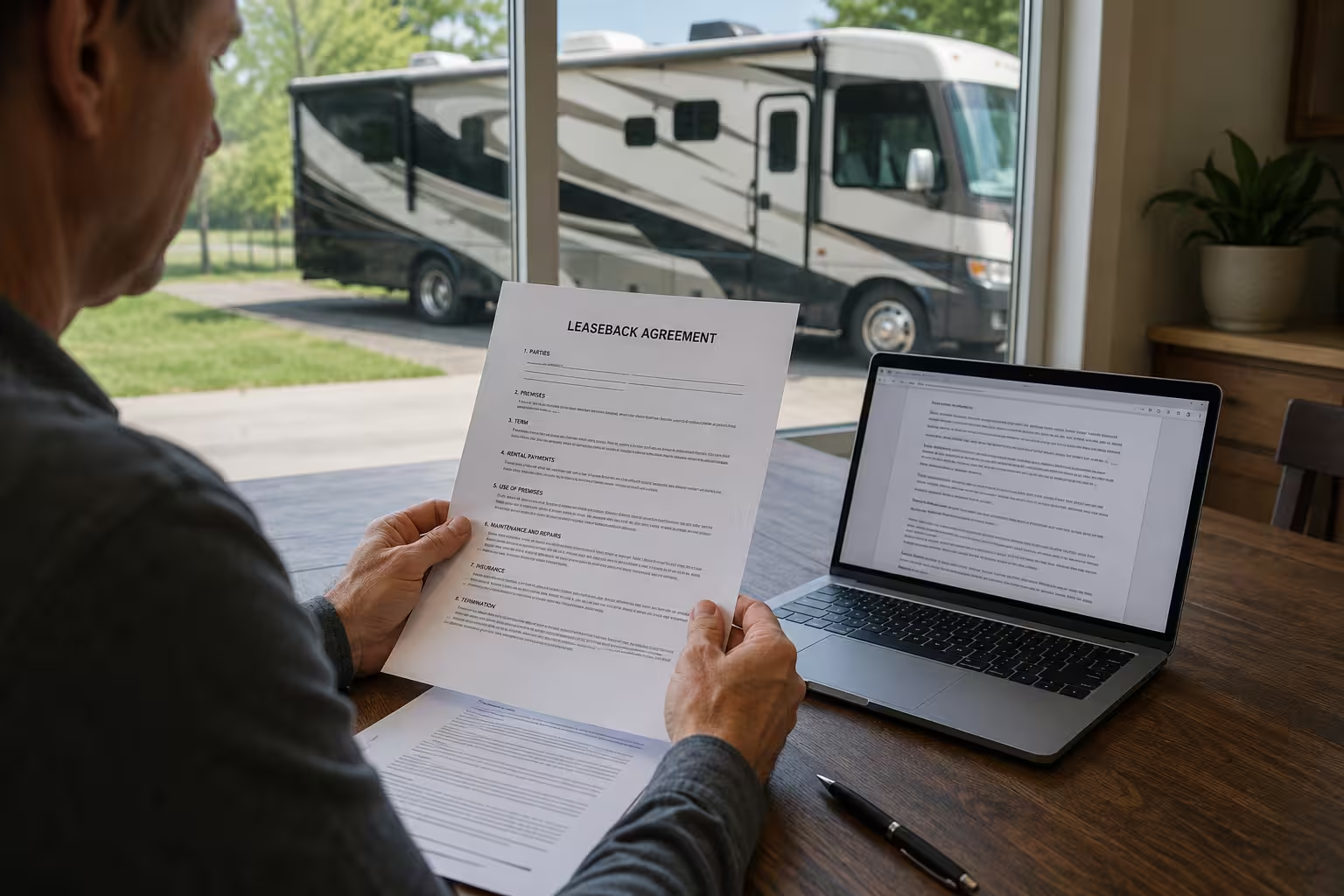
An RV leaseback lets another party use your RV for a set term in exchange for a payment defined by contract, while you keep ownership. It can free you from day-to-day rental logistics, but payment structures, use restrictions, and exit terms vary widely between agreements. The right move depends less on whether it’s called a “leaseback” and more on what the specific contract says about payment, maintenance, and your ability to get the RV back.
Here’s what this covers:
How an RV leaseback actually works
The advantages owners typically point to
The trade-offs and risks worth weighing
Leaseback compared with consignment and self-managed rental
What to check before signing an agreement
Is a leaseback the right move for your RV?
How an RV leaseback works, in practical terms
In a typical leaseback, you sign an agreement that allows a company or operator to use your RV, often placing it into a rental fleet, for a defined period. You continue to hold the title. In exchange, the operator pays you according to whatever formula the contract sets out.
That payment might be a flat recurring amount, a minimum guarantee with upside tied to performance, or some other structure entirely. Because “leaseback” isn’t a standardized product with an industry-wide definition, two agreements that use the same name can work very differently. One might hand the operator near-total control over scheduling and pricing; another might leave the owner with meaningful say over blackout dates or use restrictions.
This is also where leaseback differs from RV Management USA’s own approach. Rather than a single leaseback structure, RV Management USA works with owners through rental consignment and RV management, where a local Fleet Manager or Rental Manager coordinates bookings, cleaning, and maintenance on the owner’s behalf under the terms of a management agreement. If you’re comparing a leaseback offer to what a rental consignment arrangement looks like, that distinction is worth understanding before you sign anything.
Advantages owners typically point to
The appeal of a leaseback usually comes down to reduced involvement. You’re not the one fielding renter messages, scheduling cleanings, or coordinating repairs between trips. For an owner who bought an RV expecting to use it a handful of weekends a year and instead watched it sit in storage, that reduction in hands-on work is often the main draw.
A leaseback can also simplify decision-making. Instead of pricing each trip, screening each renter, and managing your own calendar, you’re evaluating one contract up front. Some owners find that trade, less day-to-day control in exchange for less day-to-day effort, worth making, particularly if they don’t have the time or interest to run rental logistics themselves.
Depending on the agreement, a leaseback may also offer more payment predictability than a pure revenue-share model, since some structures include a minimum or fixed component. That predictability is a contract feature, though, not a guarantee. It only exists if the specific agreement includes it, and it should be verified in writing rather than assumed.
Trade-offs and risks worth weighing
The reduced involvement that makes a leaseback appealing is also what limits your control. Once you’ve signed, you typically can’t second-guess individual booking decisions, pricing choices, or day-to-day scheduling, since that’s the operator’s job under the agreement. If you want a say in who rents your RV or when, a leaseback structure may feel restrictive.
Payment terms deserve close reading. A leaseback is not automatically better or worse than a revenue-share consignment model. It depends on the specific numbers in front of you: what’s guaranteed, what’s variable, how often you’re paid, and what happens in a slow season. Don’t assume a leaseback income figure is the same as guaranteed income unless the contract actually says so.
Access to your own RV is another point worth confirming early. Some leaseback agreements restrict personal use for the length of the term; others allow it with advance notice. If you were hoping to take a trip mid-agreement, find out before you sign, not after.
Finally, consider the exit terms. What happens if the arrangement isn’t working, the operator underperforms, or your circumstances change? A leaseback with vague or one-sided termination language can leave you stuck in a contract that no longer serves you.
Leaseback compared with consignment and self-managed rental
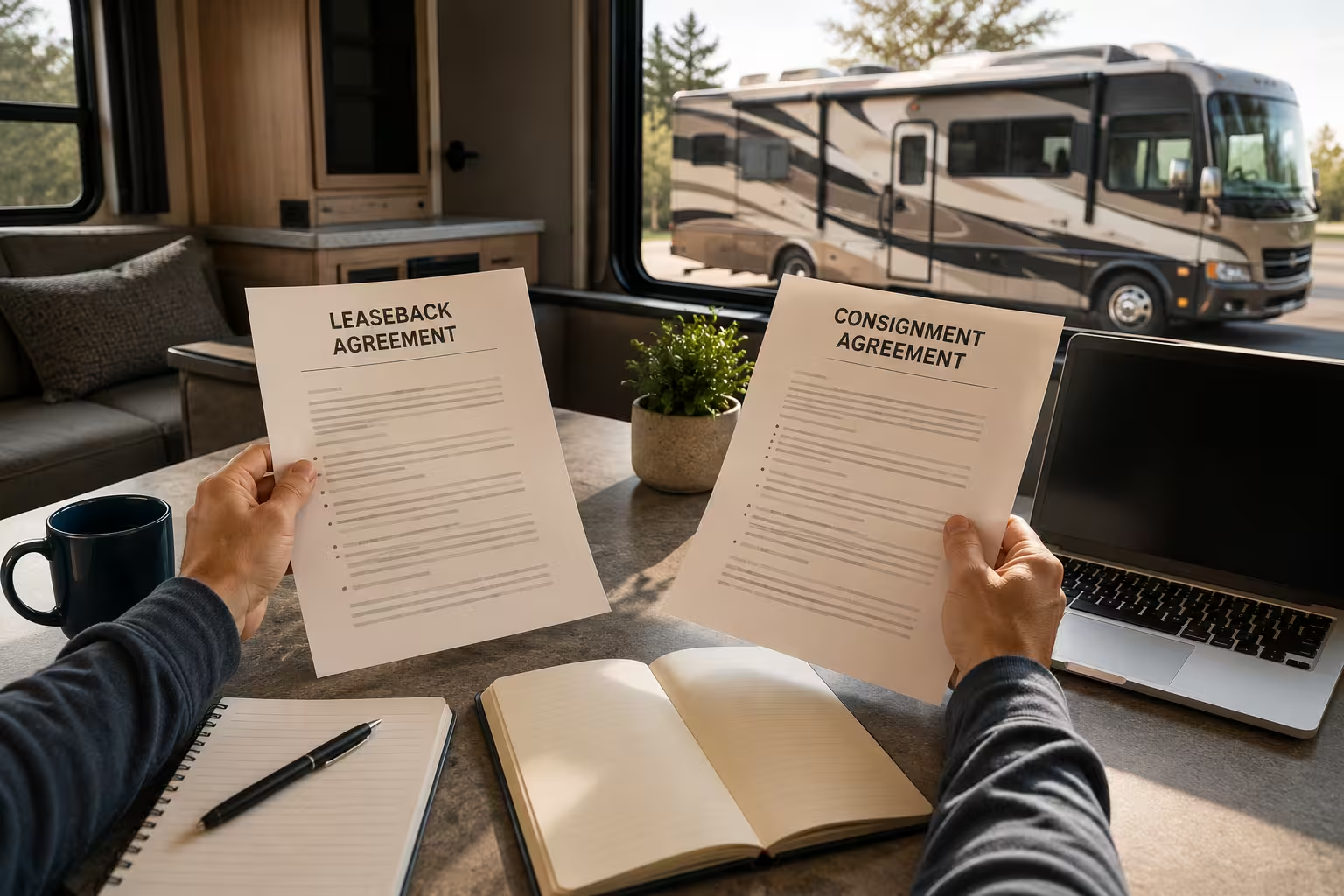
Owners weighing a leaseback often have two other realistic options: rental consignment through a management company, or managing rentals themselves. The table below compares how the three approaches typically differ, though the specifics of any individual agreement can shift these details.
FactorRV leasebackRental consignment / managementSelf-managed rentalWho books and prices tripsOperator, per contract termsLocal Fleet Manager or Rental Manager, often with owner inputOwnerOwner’s day-to-day involvementLowLow to moderateHighPayment structureSet by contract; may be fixed, guaranteed minimum, or performance-basedTypically a share of rental revenueOwner keeps full revenue minus expensesPersonal use of the RVOften restricted during the termUsually coordinated around the booking calendarFully owner-controlledMaintenance and cleaning coordinationOperator’s responsibility per agreementCoordinated by the management companyOwner’s responsibility
If low involvement matters most to you, both leaseback and consignment can deliver it, so the decision often comes down to payment structure and how much visibility you want into individual bookings. If you’d rather set your own prices and choose your own renters, self-management keeps that control, at the cost of doing the work yourself. You can compare potential outcomes for your own RV with the RV rental income calculator, and if you’re weighing a leaseback payment against a revenue-share model, our breakdown of typical RV consignment fees is a useful side-by-side reference.
What to check before signing a leaseback agreement
Before signing anything, read the contract with these questions in mind:
• How is your payment calculated, and is any portion guaranteed in writing?
• How often are you paid, and what’s the process if a payment is late?
• Can you use your own RV during the term, and if so, how much notice is required?
• Who is responsible for maintenance, repairs, and cleaning between bookings?
• What insurance is in place, and what happens if the RV is damaged?
• How long is the term, and what does early termination cost either party?
• What condition must the RV be returned in at the end of the agreement?
None of these questions has a universally right answer. What matters is that the contract answers them clearly, in writing, rather than leaving them to assumption.
Is a leaseback the right move for your RV?
A leaseback tends to make the most sense for owners who want minimal involvement, are comfortable trading control for convenience, and have carefully reviewed a specific, clearly written agreement rather than a general pitch. It tends to make less sense for owners who want a say in bookings, plan to use the RV themselves on short notice, or are being asked to sign vague or one-sided terms.
Not every RV is a strong candidate for any rental arrangement, leaseback included. Age, condition, layout, and local demand all affect whether renting out a given unit makes practical sense. That’s worth evaluating honestly before comparing specific offers.
Frequently asked questions
Is an RV leaseback the same as rental consignment?
Not exactly. Both can reduce an owner’s day-to-day involvement, but they’re typically structured differently. A leaseback usually centers on a set payment defined by contract, while consignment usually shares rental revenue between the owner and the management company. The right comparison depends on the specific terms of each offer in front of you.
Can I still take my RV on trips during a leaseback?
It depends entirely on the agreement. Some leasebacks restrict personal use for the full term, while others allow it with advance notice or a set number of blocked-out weeks. If personal use matters to you, don’t assume either way. Confirm the exact notice period and any blackout restrictions in writing before you sign, since this detail varies significantly between contracts and operators.
Does a leaseback guarantee a certain amount of income?
Only if the specific contract says so in writing, and even then, only for the portion it explicitly guarantees as fixed or minimum pay. Treat any income figure quoted verbally, in marketing materials, or in a sales conversation as an estimate rather than a promise, until you’ve reviewed the actual payment formula, timing, and conditions written into the agreement itself.
What happens if my RV is damaged during a leaseback?
Responsibility for damage depends on the insurance coverage and terms specified in the agreement, not on general assumptions about who’s “supposed to” cover it. Before signing, ask who insures the RV during the term, what the deductible responsibility looks like for both parties, and how a damage claim would actually be handled from the initial report through repair and payment.
Making the decision
A leaseback can be a reasonable way to generate income from an RV you’re not using without taking on rental logistics yourself, but it works best when you’ve read the actual contract rather than relying on the general concept. Compare the payment terms, personal-use restrictions, and exit conditions against your own priorities before you sign anything.
If you’re still weighing your options, it’s worth comparing a leaseback offer against what a consignment or management arrangement would look like for your specific RV. RV Management USA works with owners through local Fleet Managers to coordinate bookings, cleaning, and maintenance under a rental consignment model. You can share your RV’s details to see whether that approach, rather than a leaseback, fits what you’re looking for.