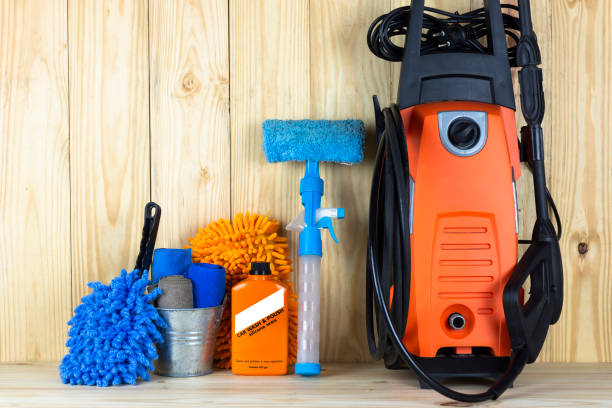

The best RV cleaning products are the ones made for the surfaces an RV actually has: a wash or cleaner-wax made for fiberglass and RV finishes, a roof cleaner matched to your roof membrane, a UV protectant for rubber seals and vinyl, RV-safe toilet cleaners and holding-tank treatments, and gentle interior cleaners. Household bleach, harsh acids and petroleum solvents can damage seals, toilet bowls and rubber roofs, so read the label and your owner’s manual before you spray anything new.
What should be in an RV cleaning kit?
Product names below are examples of each type, not endorsements, and RV Management USA has no affiliation with these brands. Always confirm a product is approved for your RV’s materials.
| Area | Product type | Example | Watch out for |
|---|---|---|---|
| Exterior siding and fiberglass caps | RV or marine wash, or a one-step cleaner wax | Meguiar’s #50 Boat/RV Cleaner Wax | Abrasive compounds on decals and graphics |
| Rubber (EPDM) or TPO roof | Roof cleaner made for your membrane | Dicor rubber roof cleaner | Petroleum solvents, citrus cleaners, abrasives |
| Rubber seals, vinyl and plastic trim | UV protectant | 303 Aerospace Protectant | Using it on floors or fabrics |
| Toilet bowl | RV toilet cleaner | Thetford RV toilet cleaners | Bleach and acidic household bowl cleaners |
| Black and gray tanks | Holding-tank treatment | Thetford Aqua-Kem | Skipping the dose on long trips |
| Floors and hard interior surfaces | Mild cleaner approved by the floor maker | Check your owner’s manual | Oily protectants that make floors slick |
| Tools | Soft brush on an extension pole, microfiber towels, two buckets | Any non-scratch brand | Stiff bristles on gelcoat and decals |
What is the best cleaner for an RV exterior?
For routine washing, a soap or cleaner-wax labeled for RV or marine finishes is the safest starting point because it is formulated for fiberglass, gelcoat and painted surfaces. One-step products such as Meguiar’s #50 Boat/RV Cleaner Wax clean and leave a protective layer in one pass, which saves time on a large rig.
Work top to bottom in the shade, rinse each section before it dries, and use a soft brush or wash mitt. Test any new product on a small, hidden area first, especially around decals and older graphics.
How should you clean an RV rubber roof?
The roof is where the wrong product does the most damage. Simple Green’s RV rubber roof guide says many manufacturers advise against harsh or abrasive cleaners, petroleum distillates, citrus-based cleaners and mineral oils because they can damage the membrane. It also notes that EPDM is less resistant to solvents and oils than TPO, and suggests cleaning the roof about four times a year, or more often if you travel a lot.
- Sweep off leaves and debris first.
- Wet the roof and sides so runoff does not streak the walls.
- Scrub small sections with a soft brush and a cleaner approved for your membrane.
- Rinse as you go, then rinse the whole roof and the sidewalls.
- Inspect sealant around vents, skylights and edges while you are up there.
Follow your RV maker’s instructions for walking on the roof. Some roofs are not designed to carry a person’s weight.
Which products are safe for RV toilets and holding tanks?
RV toilets rely on rubber seals that household products can harm. Thetford warns that bleach and acids found in most household cleaning products can dry out and damage the seals, and that acids in household toilet bowl cleaners can dull and pit the bowl surface. Use a cleaner labeled for RV toilets.
For the tanks, a holding-tank treatment breaks down waste and controls odor. Thetford’s Aqua-Kem liquid, for example, is dosed at 8 oz per 40 gallons of holding tank capacity, according to the maker.
What is the best RV floor and interior cleaner?
Start with your owner’s manual, because RV floors and countertops vary by maker. A mild cleaner diluted as the label directs, used with a microfiber mop, suits most hard surfaces. Keep vinyl and rubber protectants off walking surfaces: the 303 Aerospace Protectant listing says to avoid using it on flooring and fabrics.
For upholstery and mattresses, follow the fabric care tag, and spot test first. In a small space, ventilate while you clean and let surfaces dry fully before closing the RV up.
Can you make a homemade RV cleaner?
You can, but be careful with what goes into it. Vinegar is an acid, and Thetford cautions against acids on RV toilet bowls. Citrus-based mixes are on the avoid list for many rubber roofs. If you mix your own, keep it mild, test it on a hidden spot, and keep it away from roof membranes, toilet seals and decals unless the maker says it is safe.
How often should you clean and protect each part of an RV?
| Area | Suggested rhythm |
|---|---|
| Interior surfaces, toilet, floors | After every trip or rental |
| Holding-tank treatment | After each dump, per the product label |
| Exterior wash | After trips on dusty, salty or bug-heavy roads |
| Roof cleaning and sealant check | About four times a year, more if you travel often |
| UV protectant on seals and trim | As the product label directs, more often in strong sun |
For a broader routine that pairs cleaning with mechanical checks, see our routine maintenance checklist for RV owners.
How does cleaning change when you rent out your RV?
Renters judge an RV in the first five minutes, so a rental needs a consistent turnover routine, not an occasional deep clean. Our guide to RV cleaning practices for rental success covers the turnover side in detail.
If your RV is in a rental management program, ask your Fleet Manager which products are used on your RV and how turnover cleaning is handled. In the RV Management USA program, preventative maintenance is billed to the owner, rental damage is covered by the renter’s deposit plus the commercial rental policy, and systemic repairs are the owner’s cost.
RV cleaning products FAQ
Can I use bleach in my RV?
Not on the toilet or anywhere it can reach rubber seals unless a product maker says otherwise. Thetford warns bleach can dry out and damage seals.
Can I use car wash soap on an RV?
Some car products are fine on painted or fiberglass surfaces, but check the label for RV or fiberglass compatibility, and never use them on a rubber roof unless approved for it.
Is 303 Aerospace Protectant safe for RV floors?
No. The product listing says to avoid flooring and fabrics. Use it on rubber seals, vinyl and plastic trim instead.
What cleaner should I use on an RV rubber roof?
One approved for your membrane type. Avoid petroleum distillates, citrus-based cleaners and abrasives, which many manufacturers advise against.
What is the safest way to clean RV decals?
A mild wash, a soft mitt and no abrasive compounds. Test any wax or polish on a small area first.
Let your RV earn while it stays clean
If you are spending weekends cleaning an RV that mostly sits, rental income can help cover the cost of keeping it in shape. Talk with a Fleet Manager and the RV Management USA team to see whether your RV qualifies and what a realistic month could look like.