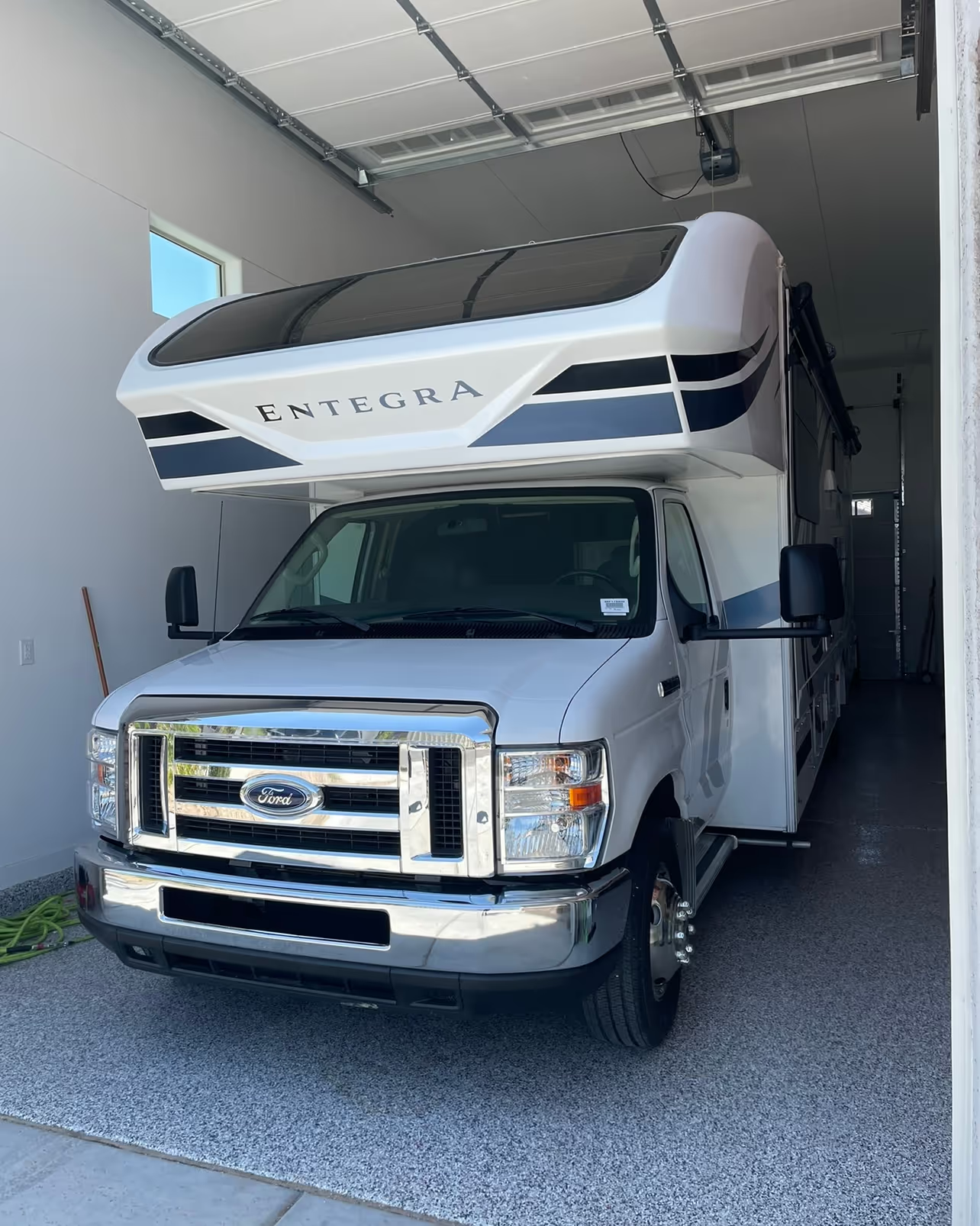


RV rental management is an arrangement where a local manager rents out your RV for you and handles storage, cleaning, renter screening, handoffs and support, while you keep ownership and share the rental revenue. At RV Management USA, revenue is shared 45% to the owner, 45% to the local Fleet Manager and 10% to RV Management USA. It suits owners who use their RV a few weeks a year and don't want to run a rental business themselves.
Most RVs spend far more time parked than on the road, and the loan, insurance, storage and upkeep keep coming either way. Renting it out can offset those costs, but doing it yourself means answering renters at all hours, cleaning after every trip and dealing with claims. This guide explains how professional management works, who does what, what you'll still pay for, and how to tell whether it fits your RV.
Contents
- How does RV rental management work?
- Who handles what
- How the revenue split works
- What the owner still pays for
- Which RVs qualify
- How much owners can earn
- Management vs. doing it yourself vs. selling
- Questions to ask any management company
How does RV rental management work?
You place your RV with a manager who rents it to travelers and runs the day-to-day operation. In return, the rental revenue is shared under a written agreement. With RV Management USA, the process usually looks like this:
- Get an estimate. You share your RV's year, make, model, condition and location, and we look at whether there's rental demand for it in your area.
- Get matched with a Fleet Manager. We connect you with the manager in your area. Some older pages on our site call this role a Territory Manager.
- Drop off and inspection. The Fleet Manager inspects the RV and you sign the rental management agreement. Our site sometimes calls this a rental consignment agreement, but you aren't selling anything.
- Photos and listings. The RV is photographed and listed so it can be found and booked by screened renters.
- Bookings and turnovers. The manager handles bookings, screening, payments, guest support, cleaning and pre-trip and post-trip checks.
- Monthly payouts. You receive an owner statement with the rental details and a direct deposit each month.
Contracts typically run 6 to 12 months, and managers work out terms with each owner individually.
Who handles what in a managed RV rental?
Most confusion with rental management comes from not knowing whose job something is. Here's how responsibilities usually divide in our program. Your agreement is the final word for your RV.
You, the RV owner
- Provide an RV in good, rentable condition
- Keep basic personal insurance on the RV, which is required before it enters the program
- Pay for preventative maintenance and for systemic repairs that aren't caused by a renter
- Give notice when you want the RV for your own trips
The local Fleet Manager
- Stores, cleans and inspects the RV before and after each rental
- Screens renters, handles handoffs and supports renters during trips
- Makes sure commercial rental insurance is in place for each rental and collects security deposits
- Coordinates preventative maintenance and handles damage claims and repairs from rentals
RV Management USA
- Matches owners with Fleet Managers in markets with rental demand
- Supports the network of managers and the owner relationship
The renter
- Pays the booking, leaves a security deposit and follows the rental terms
- Is responsible for damage that happens during their rental
How is rental revenue split?
In the RV Management USA program, rental revenue is shared 45% to the owner, 45% to the Fleet Manager and 10% to RV Management USA. Your written agreement defines exactly which fees, such as payment processing, come out before the split and when payouts arrive, so read that section line by line.
Here's a hypothetical example to show the math. It isn't a forecast for your RV:
- Nightly rate: $175
- Booked nights in a month: 12
- Rental revenue: $2,100
- Owner share at 45%: $945 for that month, before your own maintenance costs
Busy summer months may book more nights and quiet winter months fewer, so look at a full year rather than one strong month.
What does the owner still pay for?
Management makes ownership much more hands-off, but it doesn't make it free. Our program separates maintenance costs into three types:
- Preventative maintenance. Tire checks, roof and slide-out checks, appliance testing and oil changes keep the RV rentable. Managers do the work and bill the owner periodically, and the cost can be deducted from that month's rental profits.
- Rental damage. Damage that happens on a rental is handled through the renter's security deposit and the commercial rental insurance. The manager deals with the claim and the repair.
- Systemic repairs. Failures that aren't the renter's fault, such as an A/C unit, water pump, fridge or water heater, are the owner's responsibility. A warranty plan may cover some of these, and the manager can coordinate with the warranty company and technicians.
Insurance is the other area to understand clearly. Commercial rental coverage applies to each rental, but limits, deductibles and exclusions come from the actual policy. Ask to see it, and read our explainer on how insurance works in RV rental management.
Which RVs qualify for rental management?
RV Management USA generally accepts RVs that are 5 years old or newer and in great condition, and we sometimes make exceptions for very well-maintained older units. The program focuses mostly on newer Class A, Class B and Class C motorhomes and late-model travel trailers with bunk beds. We also consider fifth wheels and custom conversion campervans.
Condition matters as much as age. Renters expect working appliances, clean interiors and a reliable vehicle, and an RV that breaks down often costs everyone money. If yours needs repairs, it's worth fixing them before you apply.
How much can owners earn?
Most owners in the RV Management USA program earn between $500 and $2,000 a month, and Class A, B and C motorhome owners average about $8,000 to $20,000 a year, depending on location and RV type. Those are program-wide ranges, not a promise for any single RV.
Your number depends on a handful of things: the RV's type and floorplan, how close it is to demand such as national parks or event destinations, the season, how many dates you keep for yourself, and its condition and reviews. Our article on how much you can make renting out your RV breaks those variables down, and the RV rental income calculator gives you a quick starting estimate.
Rental management vs. doing it yourself vs. selling
There's no single right answer. It depends on how much time you have and whether you want to keep the RV.
| Rental management | Renting it out yourself | Selling | |
|---|---|---|---|
| Your time | Low | High: messages, cleaning, handoffs, pricing and claims | A one-time effort |
| What you keep | 45% of rental revenue in our program | Everything after platform fees and your own costs | Sale proceeds after fees and any loan payoff |
| Control | Shared with the manager | Full | None after the sale |
| Best for | Owners who want to keep the RV and offset costs without running rentals | Owners who live near demand and enjoy hosting | Owners who no longer want an RV |
For a closer look at the first two, see renting your own RV vs. rental management and our honest pros and cons of rental management.
What should you ask any RV management company?
Whether you talk to us or someone else, these questions protect you:
- What's the revenue split, and what's deducted before it?
- How are payouts calculated, and what does the monthly statement show?
- Who carries commercial rental insurance on each trip, and what are the deductibles and exclusions?
- Which repairs are mine, and how am I billed for maintenance?
- How do I reserve the RV for my own trips?
- How long is the contract, and how do I end it?
- Where will the RV be stored, and who has access to it?
Our guide to key terms in RV rental management agreements explains what to look for in the contract itself.
What are the main risks and trade-offs?
Being honest about the downsides helps you decide well. Your RV will see more miles and more wear than it would sitting in storage. You give up some control over pricing and who rents it. Income rises and falls with the seasons. And you still pay for routine maintenance and systemic repairs. For many owners, rental income more than covers those costs, but it isn't guaranteed and it isn't completely passive.
If you run a dealership, manufacturer or rental fleet rather than owning a single RV, our partnership program is the better starting point.
RV rental management: frequently asked questions
Can I still use my RV?
Yes. Tell your Fleet Manager the dates you want, and if they aren't already booked by a renter, they'll be reserved for you. Give as much notice as you can, and return the RV clean and ready for the next renter.
When and how do I get paid?
Owners are paid monthly. Each month you receive an owner statement that breaks down the rentals, along with a direct deposit. Maintenance costs billed to you can be deducted from that month's rental profits.
What happens if a renter damages my RV?
Damage that happens during a rental is handled through the renter's security deposit and the commercial rental insurance on that trip. The Fleet Manager manages the claim and the repair, so your personal insurance isn't the first line for rental damage. Coverage details depend on the specific policy.
Is RV rental management the same as RV consignment?
Not the way most people use the word. Dealer consignment means a dealer sells your RV for a commission. Rental management keeps you as the owner while a manager rents it out. Our site uses “rental consignment agreement” to mean the rental management agreement, not a sale.
Do you manage RVs in my area?
RV Management USA works with Fleet Managers in many cities and states. Availability depends on whether there's a manager and rental demand near you, which is why we review each RV and location before matching you.
See if your RV is a good fit
If your RV is in good shape and spends most of the year parked, tell us about your RV for a free rental income analysis. A Fleet Manager and the RV Management USA team will look at your RV and location and tell you honestly whether it's a fit. You can also start with the rent my RV overview.