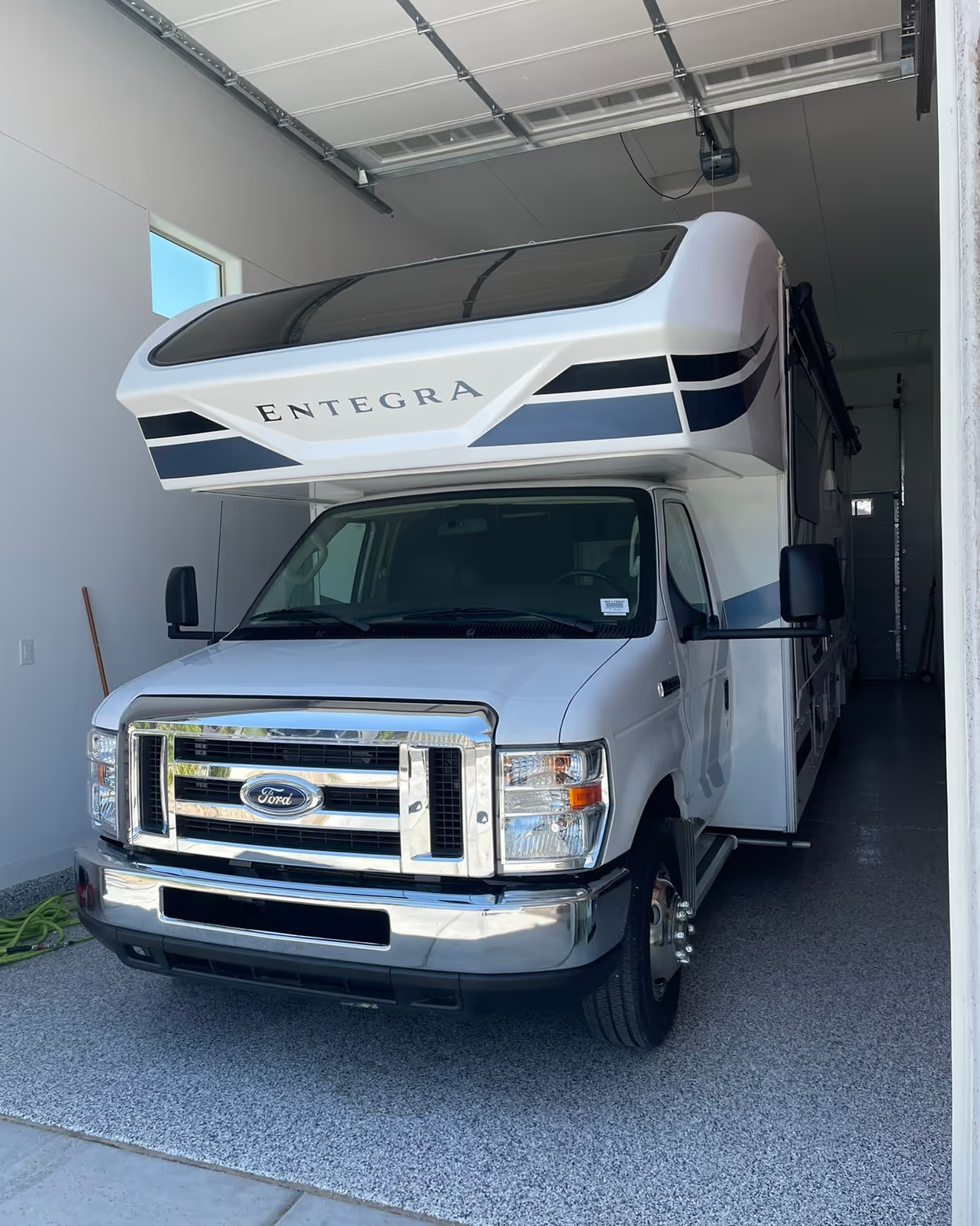


To store an RV at home, first confirm your city and any homeowners association allow it, then park it level on a firm surface such as gravel or concrete, cover the tires and ideally the whole RV, keep the batteries charged or disconnected, seal out rodents and moisture, and winterize it if temperatures will drop below freezing. Then check on it regularly. Home storage saves on monthly fees, but only if you prevent the slow damage that idle RVs pick up.
Here are the seven steps in order, with what each one prevents.
Is it legal to store an RV at your house?
Often, but not everywhere. Many cities and homeowners associations restrict where an RV can sit on residential property, how long it can stay and whether it can be in the driveway. San Leandro, California, for example, prefers side or backyard parking, allows one stored RV per property and does not allow parking on the lawn or dirt. Rules like these vary widely, so check your city’s code and your HOA documents before you build a pad or buy a cover.
What are the steps to store an RV at home?
| Step | What to do | What it prevents |
|---|---|---|
| 1. Check the rules | Read your city code and HOA rules | Fines and forced moves |
| 2. Pick the spot | Choose level, firm ground away from trees and tall grass | Sinking, sap and branch damage, pests |
| 3. Build a pad | Use gravel, concrete or asphalt | Ruts and tires sitting in mud |
| 4. Protect from sun and weather | Use tire covers and a breathable RV cover or carport | UV cracking, faded finishes, roof wear |
| 5. Care for batteries | Charge fully, then disconnect or use a maintainer | Dead or damaged batteries |
| 6. Seal out pests and moisture | Remove food, close gaps, control humidity | Chewed wiring, mold and odors |
| 7. Check it regularly | Walk around and inside on a schedule | Small leaks becoming big repairs |
Where should you park an RV on your property?
Look for level, well-drained ground with room to back in and out safely. A level RV is easier on the frame and on the refrigerator, and it keeps water from pooling on the roof. Avoid parking under trees, which drop sap and branches, and avoid tall grass, which shelters rodents. If you have slopes or a drainage ditch at the end of the driveway, walk the path first so you do not drag the rear or bottom out.
Do you need a parking pad for an RV?
A pad is not always required, but it is worth it for long-term storage. Gravel is the budget option, while concrete or asphalt costs more and lasts longer. A firm pad keeps the RV from settling unevenly and keeps tires off wet soil. If your city has surface rules, like the paved-surface requirement in some codes, follow those first.
How do you protect RV tires and the exterior in storage?
Sun is hard on RV tires and finishes. Tire covers block UV, and a breathable RV cover or carport protects the roof and seals. The Good Sam storage guide also suggests unloading weight, setting pressure correctly for storage and moving the RV every few months so tires do not flat-spot. Always check your tire maker’s guidance for storage pressure, and reset to normal operating pressure before you drive.
Wash the RV before covering it so dirt does not sit under the cover, and inspect roof seals while you are up there. Our guide to the best RV cleaning and protection products covers what to use.
How should you store RV batteries?
RV Life’s guide to storage problems (updated June 2024) recommends fully charging batteries before storage, checking voltage every three to six months, and recharging if they read 12.4 volts or lower. If the batteries stay in the RV, disconnect them or use a battery maintainer. In freezing climates, the same guide suggests removing them and storing them somewhere sheltered, such as a garage.
How do you keep rodents and moisture out of a stored RV?
- Remove all food and clean out crumbs, cabinets and the refrigerator.
- Prop the refrigerator door open to prevent odors and mold.
- Seal gaps where pipes and cords enter the RV with steel wool or sealant.
- Use moisture absorbers, or a dehumidifier if you have power at the spot.
- Crack a roof vent if it is protected by a vent cover.
- Close blinds to limit UV damage to fabrics and dash surfaces.
Do you need to winterize an RV stored at home?
If temperatures will drop below freezing, yes. Water left in lines, tanks or the water heater can freeze and crack fittings. Follow your owner’s manual and our step-by-step RV winterizing checklist.
How often should you check an RV in storage?
A quick walk-around every week or two catches most problems early, and a closer inside check once a month is a good habit. Look for water stains, signs of pests, low tires, cover damage and battery voltage. Also consider basic security, such as a hitch or steering lock. Our guide to preventing RV theft lists the options.
Is home storage better than a storage facility?
| Factor | At home | Storage facility |
|---|---|---|
| Monthly cost | Low after setup | Ongoing fee |
| Access | Anytime | Depends on gate hours |
| Rules | City and HOA limits apply | Facility contract |
| Weather protection | Whatever you build | Outdoor, covered or indoor options |
| Security | You manage it | Gates, lights, cameras vary by site |
For current price ranges, see how much RV storage costs.
Frequently asked questions
Can I park my RV in my driveway?
It depends on your city and HOA. Some allow it with setback or size limits, others only allow side or backyard parking. Check your local code first.
Should I cover my RV in storage?
Yes, if you can. Use a breathable cover made for RVs, and cover the tires to block UV.
How often should I start a stored motorhome?
Follow your chassis and generator manuals. Many owners run the engine and generator periodically, but the right schedule depends on the model.
Should I leave my RV plugged in while stored?
Only with a battery maintainer or a charger designed for long-term connection. Otherwise, charge fully and disconnect.
Would you rather your RV earn money than sit?
If your RV is 5 years old or newer, it could be earning rental income instead of waiting in the driveway. Talk with a Fleet Manager and the RV Management USA team about how the program works. Contact us here.